



It might be easy to dismiss digital authoritarianism in Ethiopia as something distant and exotic, that is not applicable to the European context. However this could not be further from the truth. While research in Ethiopia often leaves more questions than answers, due to the country’s diversity and complexity – Ethiopia has 90 ethnic groups and almost as many languages – there are numerous lessons that can be taken from its government’s ongoing use of information suppression.
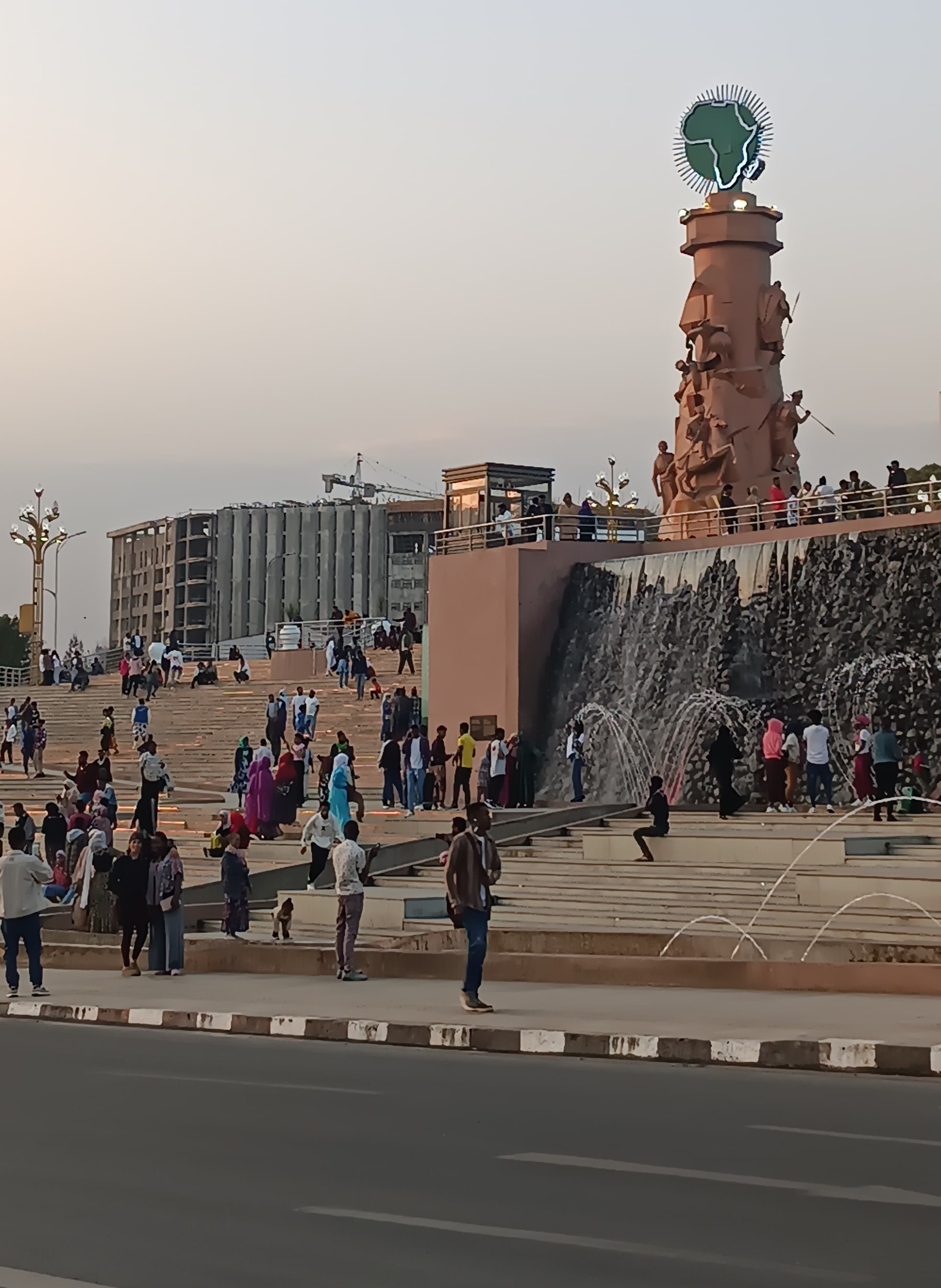
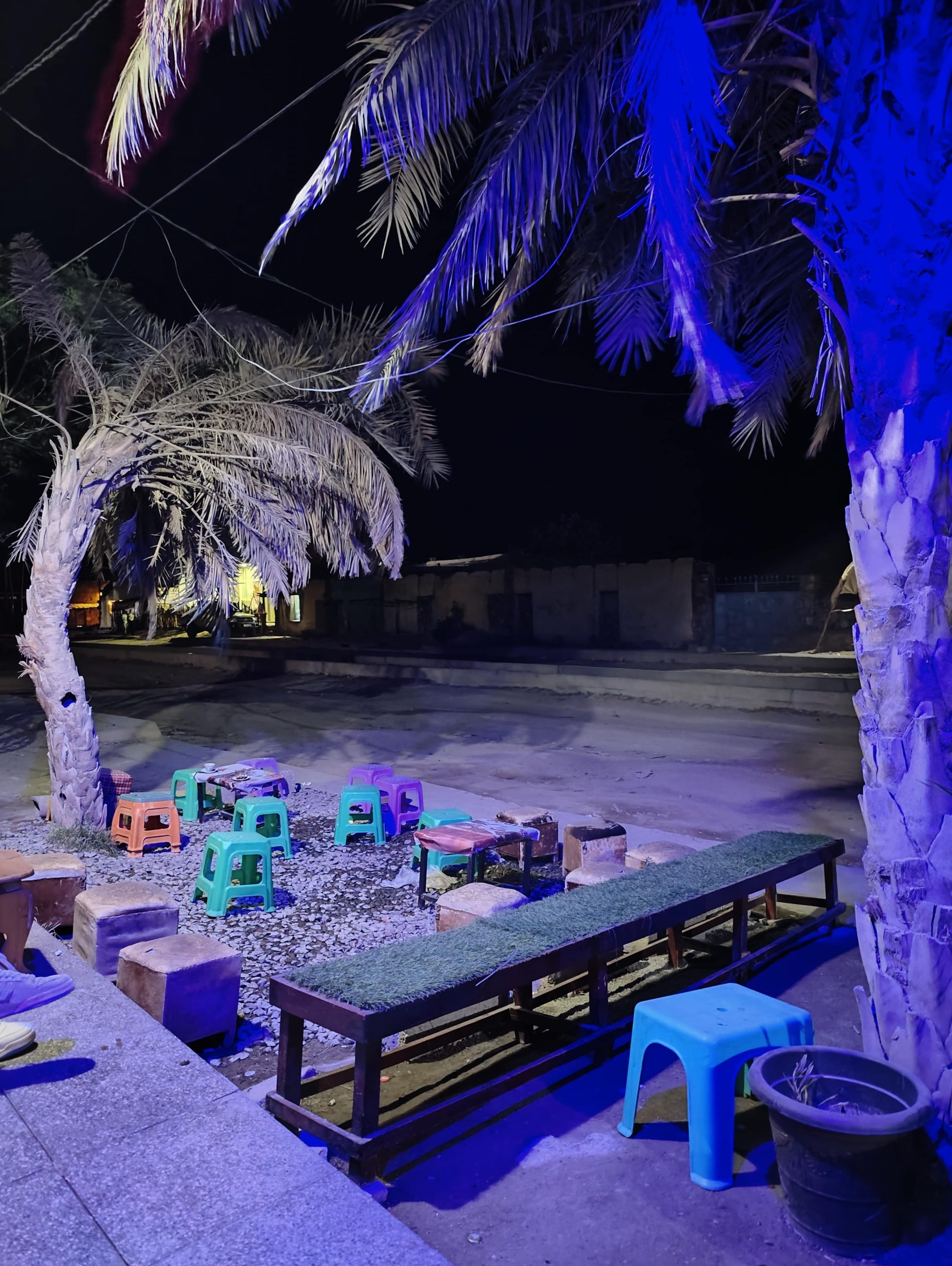
Ethiopia’s recent history has been a volatile one. Coffee, brewed in makeshift cafés on every street corner, helped sustain a relatively thriving economy when Haile Selassie took over in Ethiopia in 1930. Yet by his downfall in 1974, the country was an impoverished powder keg, destabilized by failed[LA1] land reforms, favouritism toward a few wealthy landlords, and continued tensions in Eritrea. Marxist rule by the Derg followed until 1991, when the coalition of the Ethiopian People’s Revolutionary Democratic Front (EPRDF) took power. While promising democratic federalism, it was ultimately dominated by the Tigray People’s Liberation Front and by the mid-2010s, protests across Oromia and Amhara signalled the unravelling of the fragile order.
And so, in 2018, Abiy Ahmed, whose first name means “revolution,” assumed office and was heralded as Prime Minister. His rise initially seemed to mark a turning point. Journalists and political prisoners were released, extensive internet shutdowns stopped, and the country seemed to embrace fundamental freedoms and the rule of law. Abiy even received the Nobel Peace Prize for his role in normalizing relations with Eritrea, something that in hindsight seems at least tragically ironic.
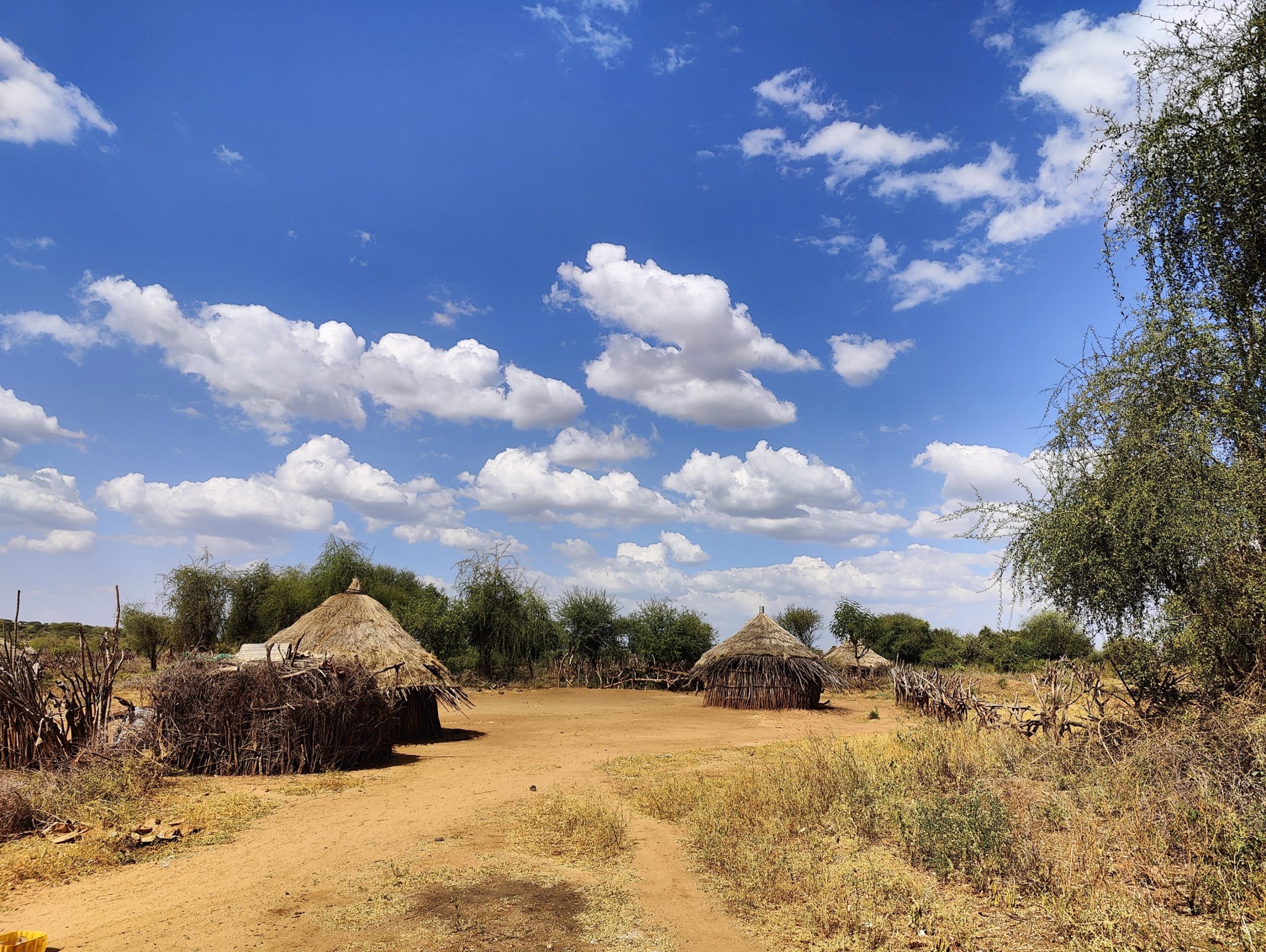
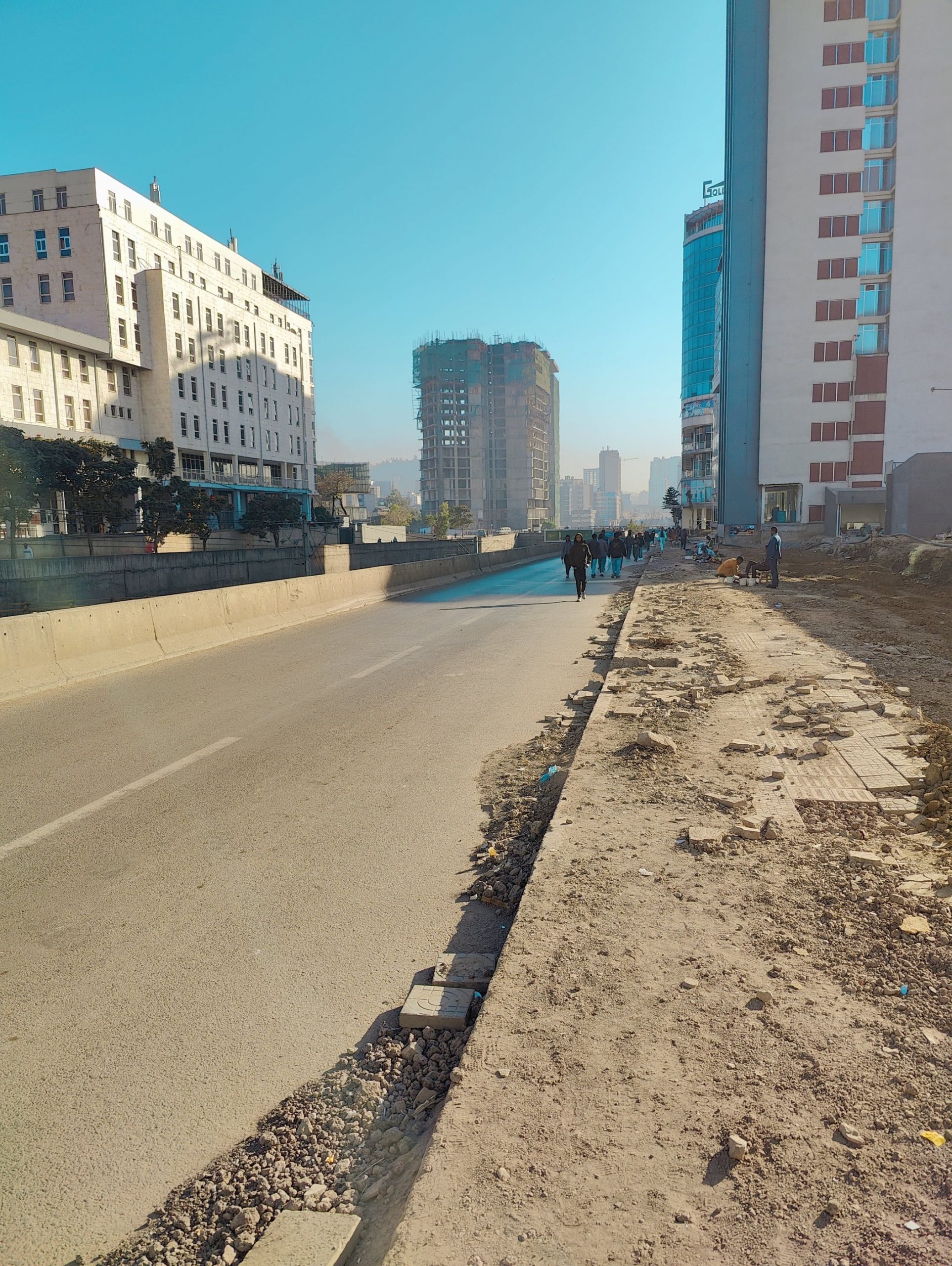
Yet, optimism quickly collapsed. Ethnic conflicts resurfaced, and by 2020 Ethiopia was consumed by the devastating Tigray War, which left around 600,000 dead. Though a peace treaty ended the fighting in Tigray in 2022, violence soon erupted in Amhara and the conflict in Oromia continuedwith unabated force. While the country is more unstable than ever, the government aims at developing Addis Ababa as a secure, modern capital. Abiy Ahmed builds fee-based parks, massive hotels, and bicycle lanes. All in a capital where the economic situation forces most citizens to travel exclusively on foot. Noticeably, I did not see a single bicycle anywhere on my visit, leaving me with the impression that the bike lanes are more of a show-off than reflecting a real need. Equally unprecedented is the ‘Corridor Program,’ where houses are demolished, people are indiscriminately displaced, and entire neighbourhoods are erased from the map, allegedly to improve connectivity and infrastructure.
While many city dwellers have lost their homes, the public reactions have been muted and there has been no organised resistance to the plans. . This reflects the larger political picture of Ethiopia under Abiy Ahmed. The Prime Minister, has lau[TM2] nched a multi-front campaign against any dissent. One interviewee, a human rights lawyer, smiled recalling the instructive phone call he received from the ‘office’ of the Prime Minister after one of his critical tweets regarding an athlete.
The arsenal for suppressing and neutralizing any differing opinion includes unrestrained restrictive [TM3] measures, incompatible with the country’s international obligations. The range extends from hate speech against ‘dissidents,’ to disinformation, repressive laws, and internet censorship, shaping a puzzle of digital authoritarianism. The most effective tool for this is internet shutdowns – which I experienced during my trip – by which the government tries to prevent political mobilization and block the dissemination of news about military repression. The people of Tigray endured a total of two years without internet, and some residents of Amhara and Oromia are experiencing similarly long shutdowns. Social media pages are often blocked, or access to them is drastically slowed, known as throttling. Ethio Telecom, largely state-owned, has used this tactic to restrict access primarily to social media platforms, aiming to limit the spread of information.
The dissemination of misleading narratives via fake accounts is also blocking access to information. It is aimed at discrediting government critics or specific ethnic groups, sometimes presenting certain events entirely differently. Facebook itself has often shut down numerous accounts linked to the government, as they were fake and tried to manipulate the 2021 election results. In Ethiopia these platforms often turn into ‘anti-social’ networks rather than social ones. During the Tigray War, social media was used as a digital battlefield, where specific narratives were methodically constructed to influence perceptions of events.
Other times, so-called ‘internet noise’ is used, where the web is flooded with trivial or even amusingly false information to distract the public from truly critical matters, such as when a map circulated showing Ethiopia extending to the Red SeaThe government appears to be winning this battle, using not only algorithms and bots, but also hiring staff for this task. The so-called internet army, trained in China and paid 300 euros for their valuable services, targets domestic journalists, activists, and dissidents, as well as many living outside the country.
In addition to these methods, a multitude of laws have been put in service of suppressing freedom of expression. These laws may be correct on paper but are ignored in practice. It is not uncommon for journalists and activists to be arbitrarily arrested. For example recently, in a sweep operation, various human rights NGOs were shut down without legal basis. More often, laws are artificially crafted from the outset to be used against dissenters, whether journalists or ordinary social media users, employing excessively broad legal concepts to facilitate abuse. Direct criminalization of criticism also occurs through legislation that vaguely protects ‘national unity’ and is prone to misuse. Added to this is the frequent declaration of a “State of Emergency,” with the attendant curtailment of freedoms, whose extensive use has made it the norm rather than the exception.
As a result, activists, journalists, and ordinary citizens experience the so-called “chilling effect” of repressive measures, having seen what happens to those who dare to speak out, and abstain from doing so in the public digital sphere. At the same time, online disruptions, bots, digital noise, and account suspensions in principle serve to hide a significant amount of information. However, they also spread false news that manipulates public opinion in specific directions – usually absolving those in power of any accountability or political responsibility. In this way, freedom of expression and access to the internet, a right that stands on its own today, are severely curtailed, and any real expectation of liberties, the rule of law, and ultimately democracy itself, is effectively undermined. Many of the people interviewed would rather the anticipated elections in 2026 not take place if freedom of expression continues to be silenced in these ways.
Research in Ethiopia, then, leaves a bitter aftertaste, as it feels like working in a land of silenced voices. For me, as a European and a Greek, I feel comparisons with my country keep surfacing. Are we really so far removed from this reality? Are Greek freedoms truly secure, shielded by the supposed guarantees of a Western democracy? Recent studies from the University of Oxford suggest otherwise. Ethiopia should, as it indeed did, impress me as a traveller with its breathtaking differences and fresh experiences compared to Greece – but not as a scholar, at least not when it comes to freedom of expression. Disinformation and manipulation are not ‘privileges’ of developing African states alone. The notion that freedom of information is firmly established in the West is simply mistaken. Here, as there, social media is manipulated by ‘government agencies’ and individual politicians. In Ethiopia, this is mostly carried out by people, whereas in Greece, both people and bots are involved. In both countries, manipulation takes the form of pro-government propaganda, attacks on the opposition, and suppression of information. In Greece, strategies additionally include disinformation, trolling, and content boosting – the latter two largely absent in Ethiopia. The only real difference seems to be that Greece’s online “army” is smaller in scale.
So rather than ‘exoticizing’ Ethiopia or taking comfort in assumed differences, a closer look at its digital authoritarianism should awaken us, not only to understand and evaluate what is happening at home but also to grasp the full scale of the disinformation phenomenon. It becomes clear that combating it is crucial in today’s global context, where both democracy and the rule of law are backsliding.